Newsletter, 6 July
Church-planting in Kibumba by Rev Innocent
Below is a short reflection written last week by Reverend Innocent Kwitonda, called “What the Church Is Doing to Respond to the People’s Crisis: The Experience of St. John ‘s Church, Buvira in planting churches in Kibumba.” Rev Innocent in the Vicar of St John’s. He is currently studying for an MA in African Christianity with CMS.
“Kibumba is the administrative centre of the Nyiragongo Territory, located in the north of the city of Goma in the eastern Democratic Republic of Congo. For decades, this region has been deeply affected by armed conflict, forced displacement and social trauma. For more than thirty years, the population has lived in constant displacement, seeking refuge in IDP camps around Goma. I was born in this area, and my life story is closely connected to the suffering and resilience of its people.
In response to this prolonged humanitarian crisis, St. John’s Buvira chose to embody a Church that walks alongside the suffering people. Faithful to Christ’s mission, the parish welcomed war-displaced families and provided essential support such as clean water, basic household items, and temporary shelter. Two of our churches hosted more than 2,000 households. This concrete engagement reflects what Dietrich Bonhoeffer described as “a Church for others,” insisting that “the Church is only the Church when it exists for others.”
Beyond material assistance, the Church’s central mission was to proclaim Jesus Christ as the true and lasting hope. As theologian Lesslie Newbigin emphasised, “The gospel is not merely a promise for the life to come, but a power that transforms life here and now.” In the midst of fear, loss, and uncertainty, the preaching of the Word of God restored dignity, meaning, and hope to people whose lives had been shattered by war.
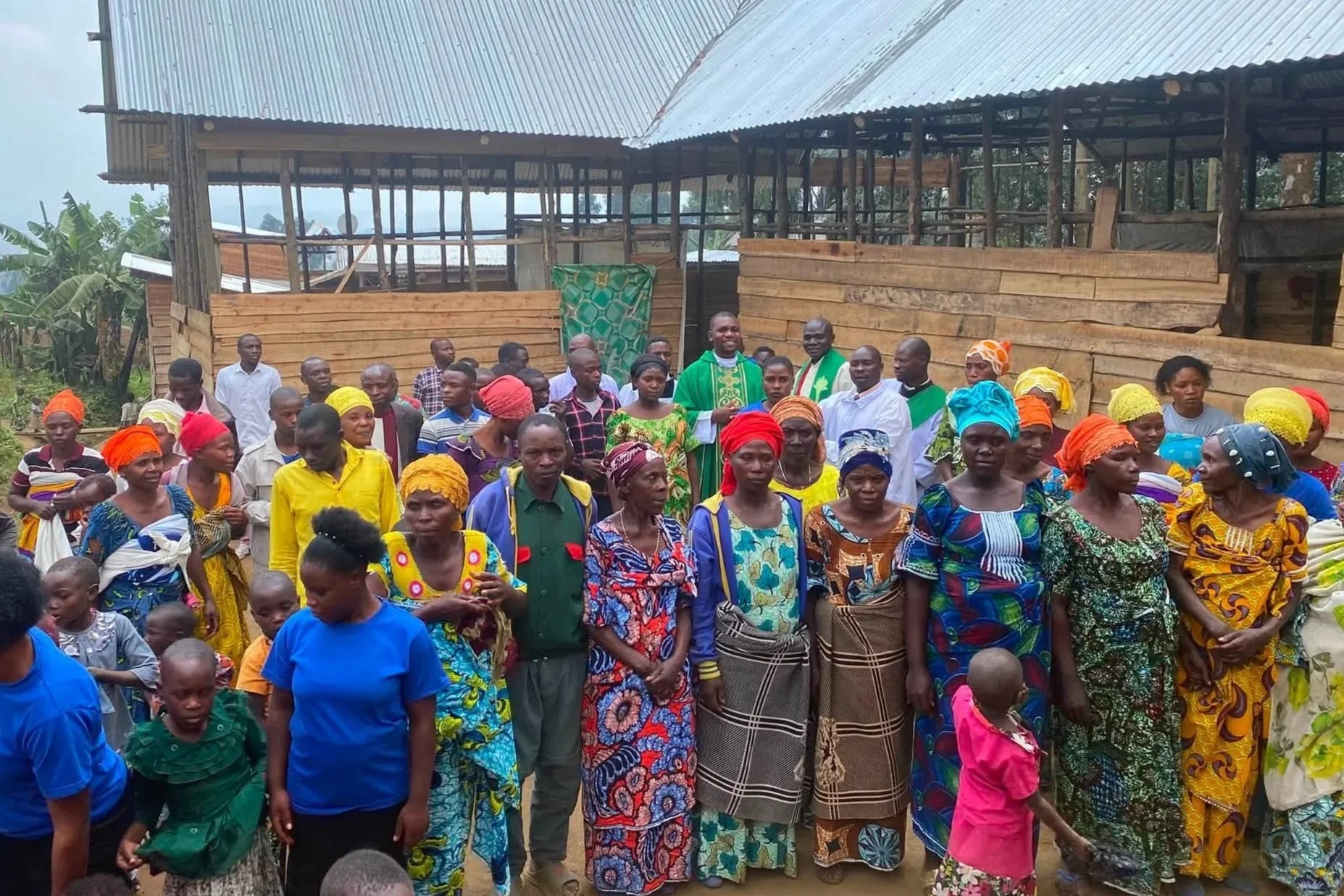
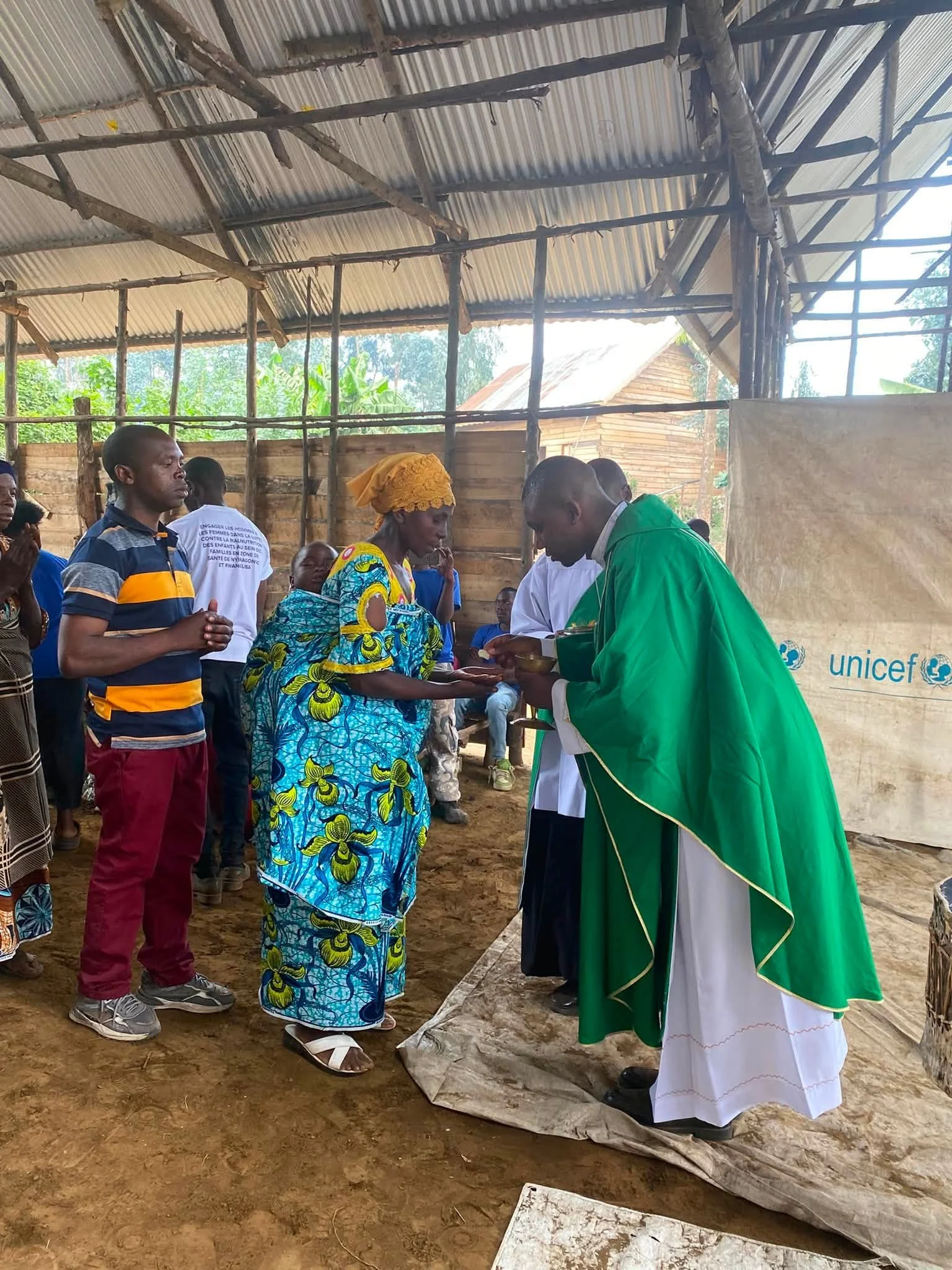
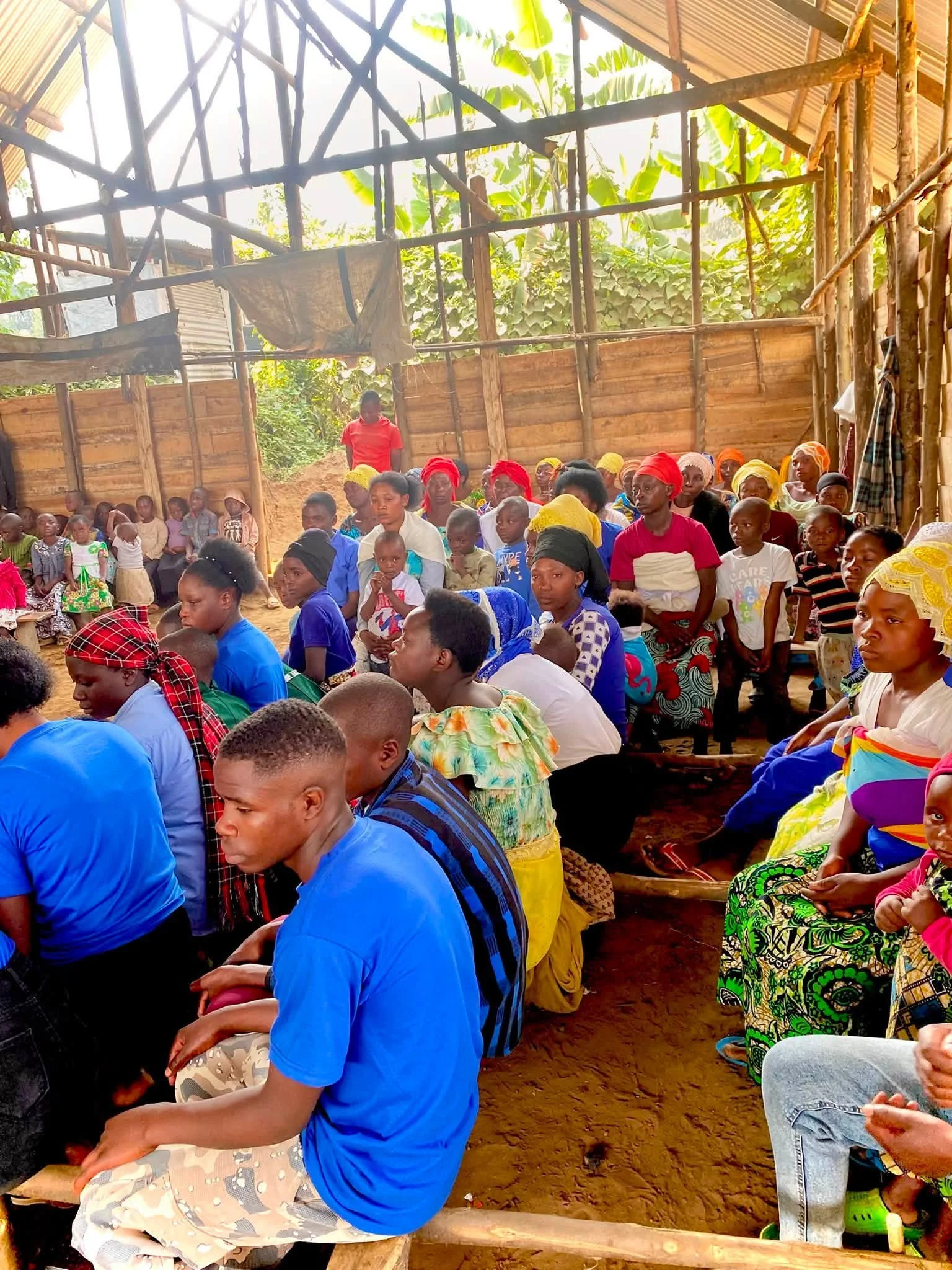
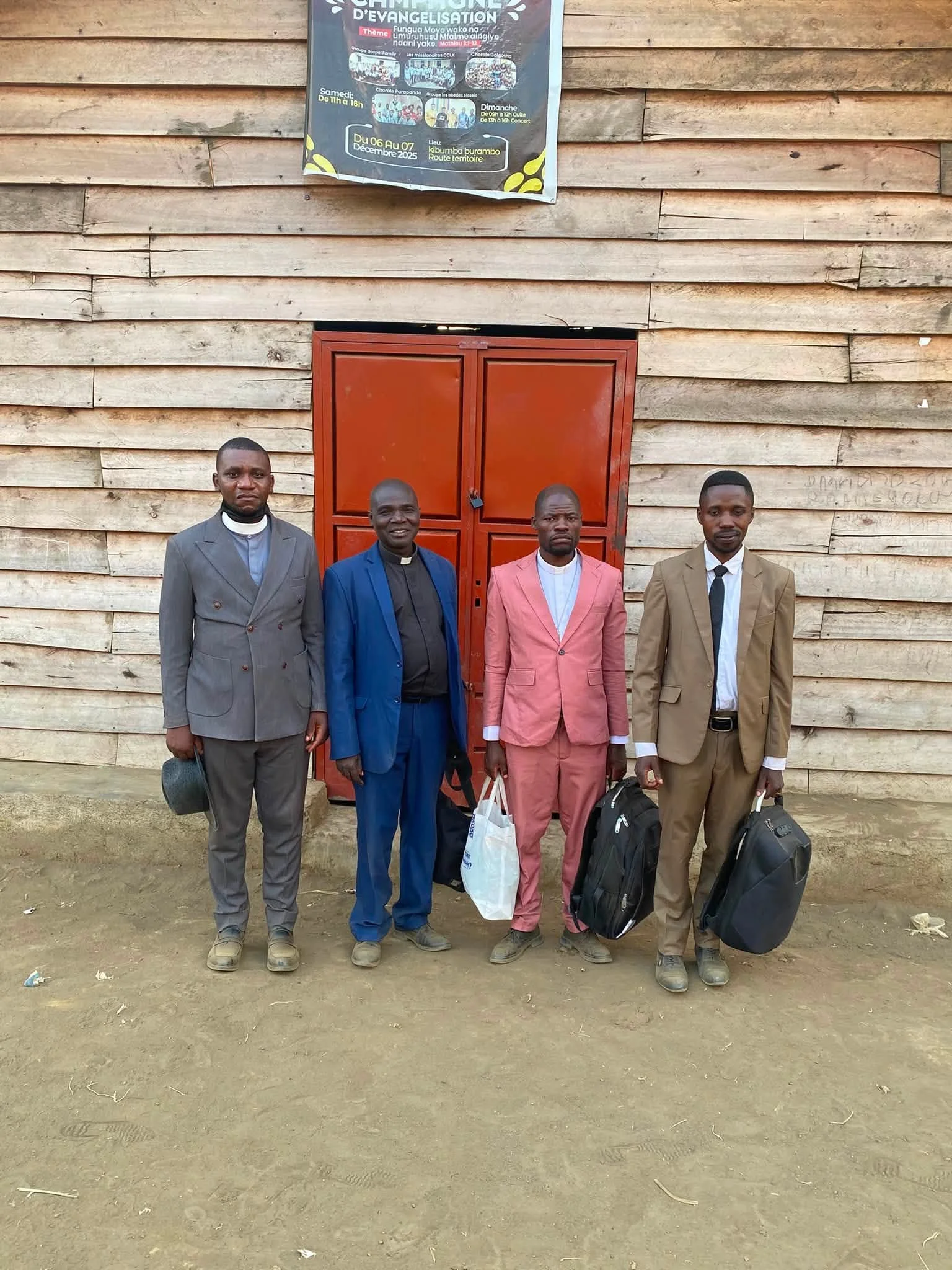
Photos: Receiving communion in one of the new churches, gathering for worship; Rev Innocent (left) and the clergy and evangelists from St John’s Parish
A Macedonian call (Acts 16:9)
Following the temporary restoration of relative peace linked to the M23 control of Goma, many displaced families were able to return to their places of origin, particularly Masisi, Rutshuru, and Kibumba. At that moment, the population of Kibumba (previously on the frontline) asked the parish of Buvira to establish a permanent presence among them. The community recognised that the Church had remained close during their suffering and believed it could continue to support them in rebuilding their lives and teaching resilience.
Since 2025, St. John’s has been actively present in Kibumba and has planted three churches that are growing steadily in both spiritual depth and community impact. These churches emphasise resilience, love, reconciliation, and holistic ministry, reflecting John Stott’s conviction that “authentic Christian mission involves both evangelism and social responsibility.” Through this integrated approach, the Church addresses both spiritual and practical needs.
Women who suffered sexual violence and harassment are gradually rediscovering hope and dignity through biblical teaching, pastoral care, and supportive fellowship. Children, who are especially vulnerable to the psychological effects of war, participate in trauma-healing sessions, educational activities, and structured play that contribute to their emotional restoration.
Through all these experiences, we firmly believe that the Lord alone is the healer of broken souls (Psalm 147:3), and that the Church remains His chosen instrument to bring healing, reconciliation, and lasting transformation to wounded communities.
How can you pray?
For the strengthening of the new churches of Kibumba
For the completion of the 3 church buildings
For discernment in who to send for theological training to help strengthen the churches
For the wholistic mission of the church across the diocese