Newsletter, 27 January
1 Year after the Fall of Goma
A year ago, the M23 rebels, backed by Rwandan troops, marched into Goma. Several days of bloody street battles ensued, where up to 8,500 died. The immediate aftermath saw a spike in sexual violence, mob justice, summary executions, kidnappings and score-settling. The city’s population lived in climate of fear, as the rebels sought to impose their authority without the necessary people, expertise or finance.
The airport and the banks were immediately closed and remain closed today. Many NGOs, businesses, and government officials left along with other middle-class Congolese and have yet to return. Rwandan goods and services have flooded the market. Local businesses struggle to compete. Money and employment are still hard to come by.
When the M23 arrived, no-one knew how long they would stay, but there is no sign of them leaving as they tighten their grip on the provincial government, the security services and business. And the population has given up hoping for a political solution, either from the government in Kinshasa, from the Washington “Peace” Deal or the Doha talks.
Today, a semblance of calm has returned to the city and people are no longer afraid to go out in the evenings. But life is still extremely hard, and the Congolese survive by drawing from their seemingly endless supplies of resilience, pragmatism and entrepreneurship. This conflict had added one more layer of trauma, the population continues to suffer with no end in sight.
A Time to Build
But there is always hope. Last week CMS did an article on the spiritual awakening in Goma amidst conflict, where the church is the one institution still trusted, relied upon and active at the heart of every village and community.
In 2025, alongside large-scale evangelism campaigns with thousands coming to faith in Jesus (see here and here), and the roll-out of the new catechism focusing on discipleship, we have been able to invest in parish and school life across the diocese, thanks to the generosity of individuals, churches and church-based organisations.
We bought 22 plots of land for parishes, and another prime plot in the centre of Goma on which we will relocate two of our flagship schools.
We have built, renovated, or helped complete 16 church buildings across the diocese – providing doors, roofs, floors, cement – or, in some cases, the whole building.
We have rebuilt 10 schools damaged by the conflict, proving a better teaching environment to nearly 4000 pupils.
We completed a guesthouse for Walikale, our archdeaconry in the forest, to generate income for parishes.
More Building in 2026
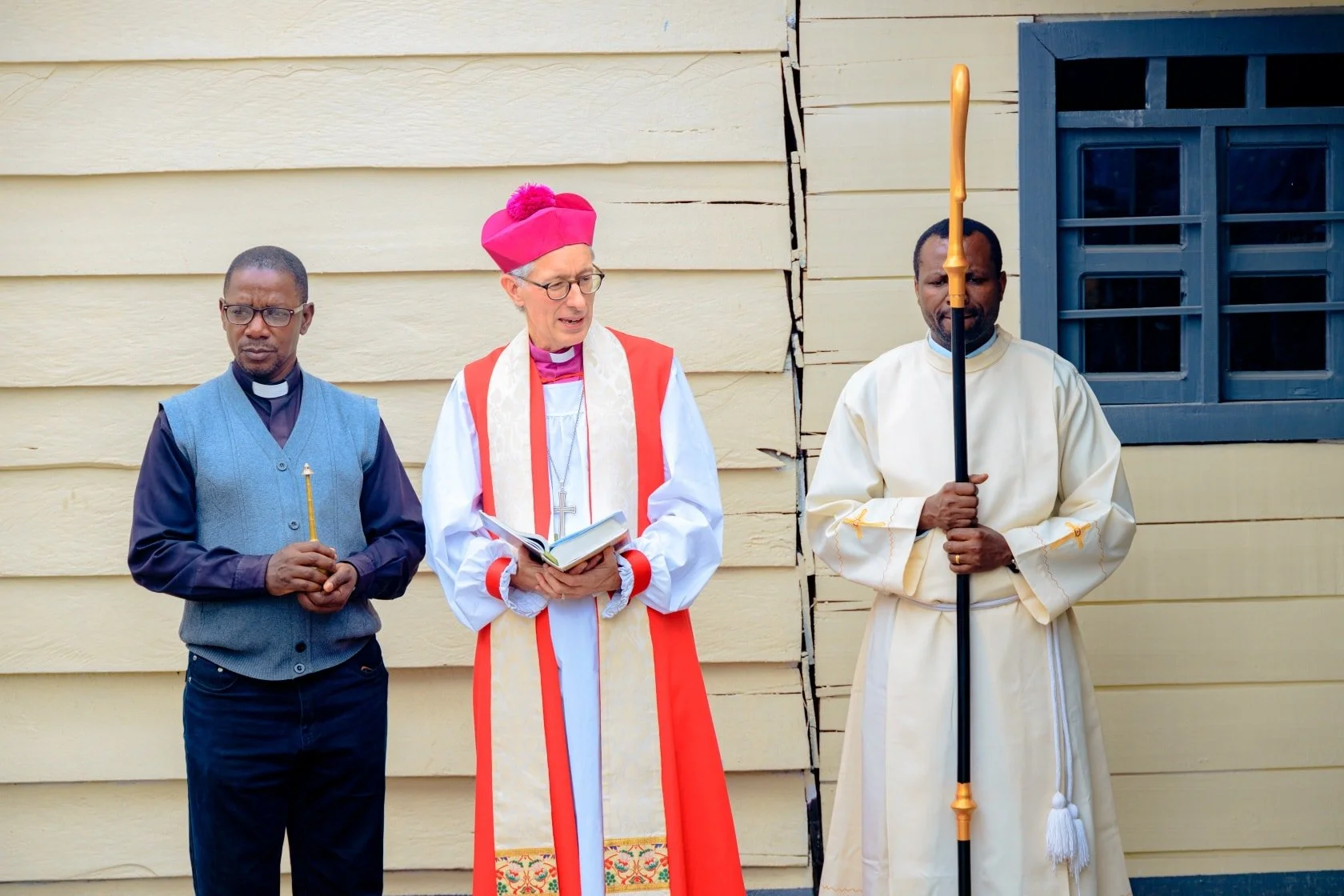
This year we celebrate our 10th anniversary and will now focus on some of our larger infrastructural projects. In the last 2 weeks we have already dedicated the addition to our diocesan office (above photo) and laid the foundation stone for the building that will house the university and the community radio.
We will soon start the build our theological college on a new site, complete with chapel, dormitories and classrooms, so that the students no longer sleep 10 to a room and have to scrabble around looking for a classroom.
And we will begin the process of relocating our two flagship schools to a more suitable location with the opportunity of relaunching them as centres of excellence for Chrisitan education. And we also hope to start our first health centre.
How can you pray?
That we would continue to build the diocese both spiritually and materially with wisdom and faith.
That the church would continue to offer hope and healing with no sign of an end to the conflict.